Categoria: Blog

The importance of the ABCs of animals

The importance of the ABCs of animals

By Miriana Maio

Non-human animals (henceforth, animals) and humans have commonalities. The more animals are phylogenetically close to humans, the higher the similarity between species. Even among groups of the same species, there are commonalities and incredible differences.

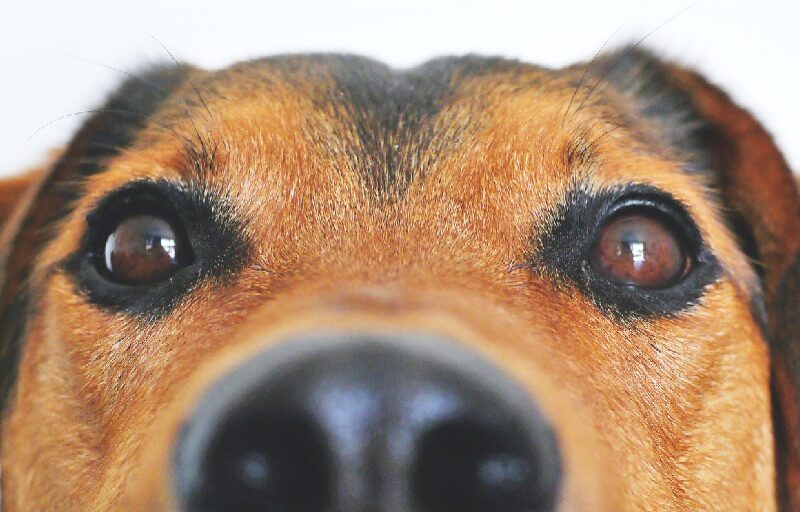
For example, cats and dogs are both animals but are entirely different. In several talks, Roberto Marchesini says that cats are loners, whereas dogs are social animals. Keeping in mind these differences, humans should behave accordingly. If we have a cat, we must know that they do not love being stressed out. Your cat will come to you when you are doing something. They love watching you working or doing chores! Conversely, dogs love playing, running, and walking with you. Dogs want a role in your life!

Animals are neither toys nor children. Some people treat their pets as if they were their children. Marchesini repeatedly stressed that feeding your animal with a spoon or carrying your cub in a bag is wrong. Even though humans behave in good faith, they unwittingly cause them harm and stress. Feeding animals with a spoon means high stomach acids. They may risk an ulcer. Carrying your cub in a bag is equally dangerous as dogs must walk on a daily basis. Consequently, animals display substitutional behaviours showing frustration caused by inappropriate human behaviour.

Humans should recognise animal subjectivity and stop humanising their pets. Animals and humans, indeed, share similarities; however, it is also true that there are many differences between them.

Ask yourself if you truly want to make the commitment to caring for a pet. I would heartily recommend knowing how to behave appropriately before adopting a dog or a cat for their physical and emotional well-being.

Unseeing elegy of the tetrachromats

Unseeing elegy of the tetrachromats

by Jessica Williams

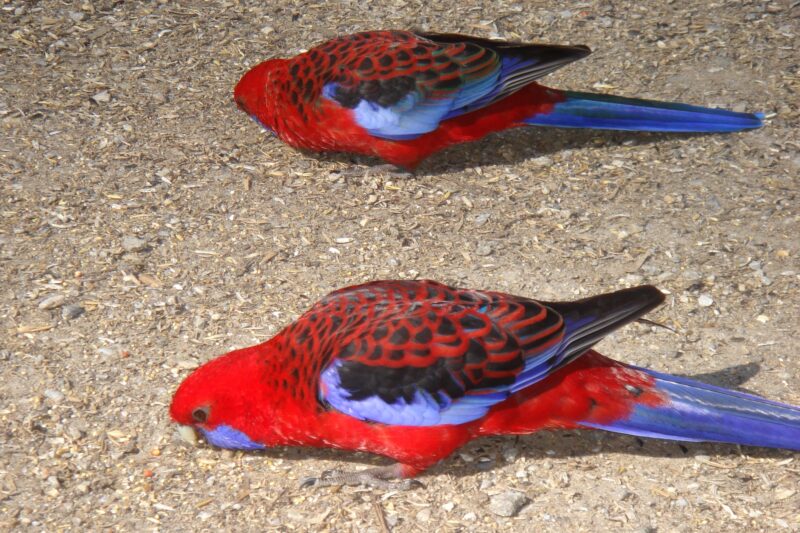
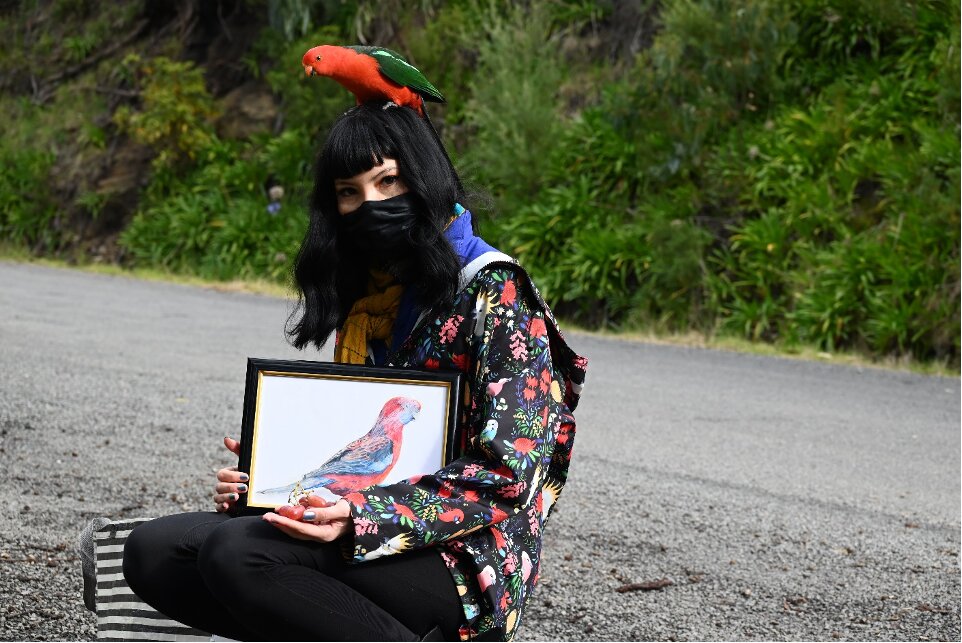
The collaborative artwork Unseeing elegy of the tetrachromats (2021) inverts the familiar trope of simulating nonhuman sensory perspectives for the human-centered spectator. It additionally positions the contributions of artists and biological scientists at the boundaries of their disciplines, in a tension of functional non-consensus. The overarching intention of the work was proposed by lead artist Jessica Laraine Williams (www.jlogos.net), to speculate on a material-cultural sovereignty for avian aesthetes. Her expectation was that these efforts would be insufficient for the intended audience, Australian parrot Platycercus elegans (the crimson rosella); her hope was to invite the birds to engage with an artistic offering, document this encounter and then to report back to human audiences with the results. In between Covid-19 lockdown periods in her home state of Victoria, Australia, she managed to stage her performance with wild parrots over one weekend.

Jessica Laraine WILLIAMS, Alex LAST, Roger ALSOP, Mathew BERG. Unseeing Elegy of the Tetrachromats, 2021. Video and sound, dimensions variable.

This project was conceived as part of Williams’ PhD research into figuration of posthuman imaginaries through boundary work with art, undertaken at the Victorian College of the Arts, Melbourne, Australia. Posthumanist practices recognize that figuring more-than-human subjectivity will always be hedged by our anthropocentric vision. From a critical studies perspective, this limitation can be theorized through questions such as what constitutes art to a given subject? What would nonhuman art look like? Extended to nonhuman animals, an anthropocentric vision of ‘animal art’ tends to seek analogues to those in human artworlds: dance, sculpture, painting, and song. Bird song and courtship displays draw these types of comparisons, particularly. Considering the avian sensorium from an ecological perspective, human vision has been shown to differ in particular biological aspects.

Why should we call them non-human animals?

Why should we call them non-human animals?

by Miriana Maio

Non-human animals or animals? Which term should we use? Why should we use one instead of the other? Presumably, “non-human animals” is the appropriate way to refer to animals, as we have many things in common. To be precise: “there are vast differences between animals and humans – as well as some surprising similarities” (Birch, Hayward, and Malim, 1996, p. 2).

These similarities are found, for instance, in communication (i.e., redundancy, productivity, turn- taking, acquisition, memory) (Rossano and Kaufhold, 2021, pp. 22–26). I would say that the traditional view that sees non-human animals as machines is almost overcome.

Nowadays, it is widely known that non-human animals are intelligent sentient beings and should not be underestimated. Godrey-Smith (2016) wrote that they are good at multiple things (pp. 50—51). Their intelligence may differ from humans; however, they can do incredible and complex things. Also, non-human animals have a high level of awareness: theory of mind, self-recognition, and intentionality (Marchesini, 2007, § 7). Aren’t those complex cognitive capacities?

Not to mention that non-human animals can also discriminate between objects and non-objects*, as well as distinguish between edible and inedible food (Andrews, 2020, p. 122). Having a language does not necessarily mean being intelligent (Dupre, 1996, p. 331). As it happens, non-human animals are not linguistic creatures, but through symbolic communication, they communicate with their counterparts and are able to acquire new information and use it in novel situations (Rossano and Kaufhold, 2021)**.

They are not automata. Non-human animals have endowments that they use with creativity and intelligence when necessary (Marchesini, 2022). Even humans have such endowments and use creativity to survive in a world with plenty of obstacles. The tabula-rasa theory doesn’t apply!